Threat anatomy
How Each Threat Actually Hunts You
Latched, denied or tracked: three enemy patterns that each demand a different verb.
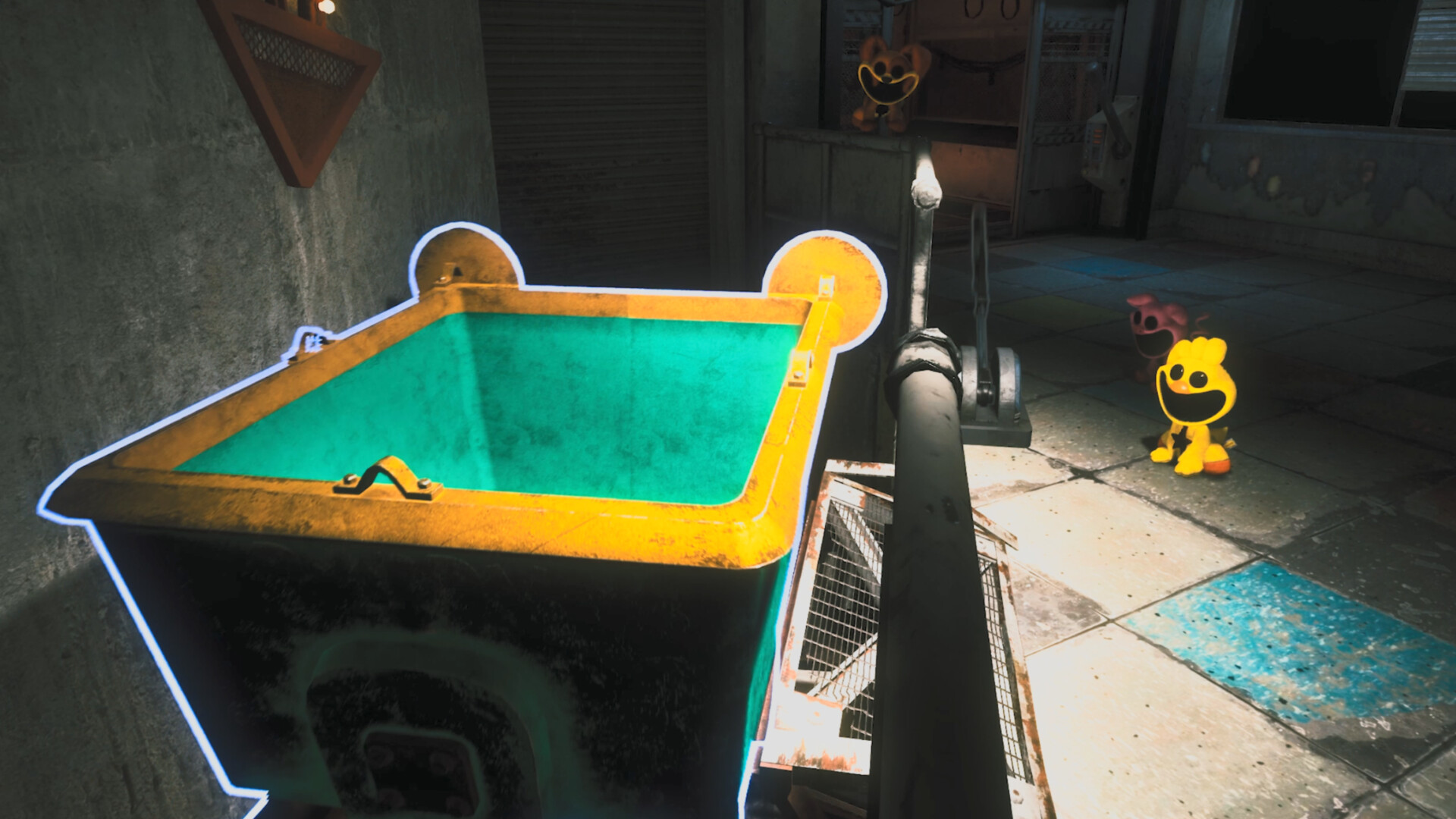
Threats in this game are better sorted by how they attach than by how hard they hit. Three patterns show up in recorded play and each one asks for a different answer: something that latches onto a player and keeps working until it is removed, something that denies an area and pushes a team out of it, and something that follows a signal rather than a body. Sorting them this way is more useful than a damage table, because the counter to each is a different verb - remove, leave, and go quiet.
The latching threat is the one that turns a teammate into a problem. A player announces that Cappy is eating them, and the warning that follows in a later moment is simply to watch out for Cappy, which tells you the creature is small enough to be missed and persistent enough to be named twice. The answer is not distance, because the thing is already on you; it is another player closing the gap and taking it off, which makes this the one enemy that is defeated by grouping up rather than by splitting.
Bombs do the opposite job. A call of there is a bomb is a warning to stop searching and start leaving, and the value of that warning is that it arrives before the blast rather than after it. Area denial matters most in a game about looting, because the room being denied is usually the room somebody still wanted to check - so the bomb does not need to hit anybody to do its work, it only needs to make a team abandon a shelf it had not finished clearing.
The tracking threat is the one that punishes noise. Sessions describe a pursuer that follows a player around a corner and a counter that is entirely about line of sight: hide, wait for it to pass, then turn left rather than run. What makes that advice worth writing down is the inversion it implies - running is not neutral, it is the input the enemy reads. A lobby that treats sprinting as the default movement is feeding the one creature that is listening rather than looking.
Whether a turn breaks the chase is genuinely uncertain in the beta, and the honest version of the advice says so. One player asks directly whether the pursuer will follow when they turn around, and nobody in the session has a confident answer. What the group does know is that the creature was never encountered in that particular run, which is a useful reminder that a guide built on one playtest documents the encounter it saw and marks the rest as untested rather than inventing behaviour to fill the gap.
Damage types and healing resources are mismatched on purpose. The cat that poisons a player is small enough to be missed in the dark, and the poison it leaves is not answered by the healing items a team normally carries. That mismatch is the design: a lobby that spends its kits on the wrong condition discovers too late that it packed for the wrong fight. The counter is not more healing but a different item, which is why the advice for a new group is to carry one of each rather than three of the one they trust.
The slap has a target list, and a boss is not on it. A player reports trying to slap Boogie Bot and getting nothing for it, which is exactly the kind of negative result a guide should record: the verb that saves you from a small creature does nothing to a large one. Knowing where an ability stops working is more actionable than knowing its damage, because the moment you need it is the moment you have no time to discover the limit.
Dead ends are a threat multiplier rather than a map quirk. A player notes with some frustration that the corridors they are searching are dead ends, and in a building where something is following a sound, a corridor with one exit is a room you can be walked into. That is the practical link between navigation and enemies: the reason to memorise which passages loop back is not convenience, it is that a loop is the only escape route that does not require outrunning anything.
Sources on record
-
Cappy latches onto a player and has to be removed by somebody else.
Tier 3, creator footage / checked 2026-10-20
-
Bombs force a team out of the room it was searching.
Tier 3, creator footage / checked 2026-10-20
-
The pursuer tracks a player around a corner unless line of sight is broken.
Tier 3, creator footage / checked 2026-10-20
-
The slap does not work on Boogie Bot.
Tier 3, creator footage / checked 2026-10-20
-
A poisoned player needs an antidote rather than a healing kit.
Tier 3, creator footage / checked 2026-10-20
-
The creature that poisons players is small enough to be missed.
Tier 3, creator footage / checked 2026-10-20
Source identifiers, capture dates and the raw quoted lines are held in this site's research record rather than reproduced on the page, so each claim above can be checked against the original without the page itself standing in for the source.