Hands-on
Beta Notes: What an Early Lobby Feels Like
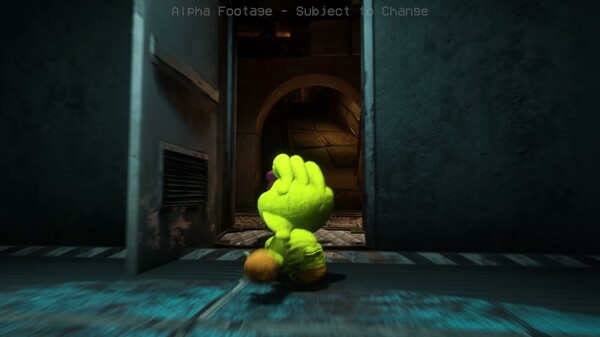
Creator footage from the early build: a lobby, a lot of unfinished systems, and a game that is honest about being in flux.
The beta build is openly unfinished, and that status is the first thing worth recording: systems are experimental, balance is still being tuned, and whole chunks of content sit locked behind progression that the test never reached. A lobby planned around any specific value observed in the beta should assume the value moves before launch. What the build does establish is the shape of a shift: a crew, a facility that rearranges itself between rounds, and a cart named Barry that has to be filled before the clock runs out.
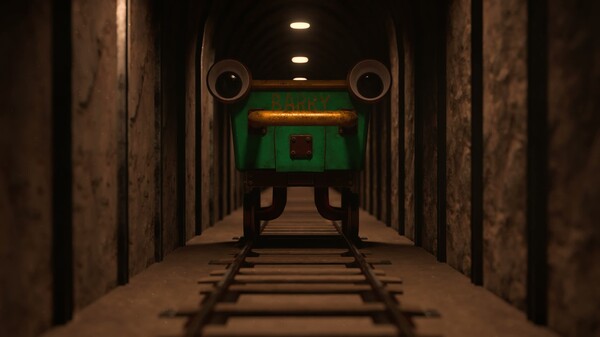
The loop is straightforward once a team stops treating it as a looting game. Scattered around the facility are toy parts, scrap and assorted junk, each carrying an internal value. Carry them back to Barry, feed them in, and the cart fills toward the quota the shift was assigned. When the quota is met the exit opens; when the timer expires first, the shift is simply over and whatever the team was holding is lost. The timer, not the monsters, is what actually shapes decisions, because every detour costs a return trip.
Movement is where the beta distinguishes itself from a walking simulator. Climbing is a core verb, not a traversal flourish, and it runs on stamina that drains while a player is on a wall, not only while moving. That single rule turns climbing into a survival tool with a cost attached: a wall is the safest place to be when something is chasing, and the worst place to be when stamina is nearly gone. Groups that learn the difference early stop dying to the same corridor twice.
Light is a resource in the same way stamina is. The flashlight runs down, batteries are scarce enough that players actively hoard them, and a dead light turns a familiar room into an unknown one. Health is handled through consumables rather than regeneration: medical kits and stitching kits restore what a chase took away, antidotes clear the lingering effects that some encounters leave behind, and shields can be spent on a teammate or fed to Barry like any other item. Nothing about recovery is automatic, so a team that burns its healing early spends the back half of a shift avoiding contact instead of searching.
Item value is where the beta gets interesting. The most sought-after pickup in recorded sessions is the slap hand, a short-range strike that gives a player one answer to something attached to them or standing between them and a door. Because an inventory fills quickly, the return trip to Barry becomes a recurring risk rather than a chore, and the decision to carry one more part instead of turning back is where most shifts are actually lost. Players also learn to keep a shield rather than donate it, which is the opposite of what the objective rewards.
Threats arrive in layers rather than as a single stalker. One enemy roams and pursues, punishing a team that spreads too thin to warn each other. Another attaches to a player and keeps dealing damage until a teammate removes it, which makes proximity a defensive requirement and not just a social preference. Explosive devices force movement, sometimes straight into whatever the team was running from. When more than one of these is active at once, the correct play is usually to abandon the area being searched, and the beta makes that lesson expensive to learn.
Progression between shifts is visible but mostly gated. The quota target climbs, the layout of the facility shifts while keeping a recognisable identity, and perks that were unavailable in an early round begin to appear. Locked doors, a storefront and a battle-pass surface all exist in the build and all refuse entry, which reads as an honest statement of intent rather than a bug: the systems were planned, they simply were not switched on for the test. Anything seen behind those doors is a promise, not content.
The social layer is what the recorded sessions actually demonstrate. Almost every recovered failure traces back to information that nobody passed on: who was carrying the only battery, who had an enemy attached, who was already heading back to Barry. Death is recoverable only if someone still alive finds the body, which converts the usual split-up-or-stay-together argument into a real decision with a changing answer as the clock runs down. That is the part of the beta worth taking seriously, because it is the part that does not depend on a number that is still being tuned.
Timers in recorded sessions were short enough to matter: one shift opened with ten minutes and twenty seconds on the clock while players were still asking how many points the quota wanted. The HUD answers part of that question and only part of it - a bank message fires when half the needed materials are in - so teams tend to over-collect rather than risk a short fall. Late in a shift the arithmetic inverts: with thirty to sixty seconds left, a player carrying one more part is better off dropping it than dying with it, because the cart does not take what is on a corpse.
Climbing is bound to the mouse - hold the left button and the character starts up a surface - and stamina drains while the player is on the wall rather than only while moving, which turns a climb into a commitment instead of a shortcut. The advice that comes out of sessions is blunt: save stamina for the moment something is chasing, because a chase ends at a wall more often than at a door. The rest of the verb set is small enough to learn in one shift: G uses whatever is held, and the interact prompt covers levers, collars and the cart.
Inventory space is the quiet constraint. Sessions include a player standing over a pile announcing there is so much loot they cannot take it all, and another refusing a pickup because the held item still had one use left in it. Parts are not interchangeable either: a smiling critter part was worth two hundred tribute on its own, while glow sticks drew the question of whether they carried any value at all. The cart does not want volume, it wants value, and a full inventory is a decision that was already made badly two rooms ago.
One locked room is opened by a puzzle rather than a key. Collars are scattered around the facility; wearing one and standing on the matching pad arms part of the mechanism, and the switch only throws once the pattern is right. The pattern is a colour order - orange, yellow, blue, red, re-read and re-checked across sessions - and a wrong sequence simply resets the room. Solving it turns the lights on in the next section, which is the first time in a shift that the facility visibly rewards anything other than filling Barry.
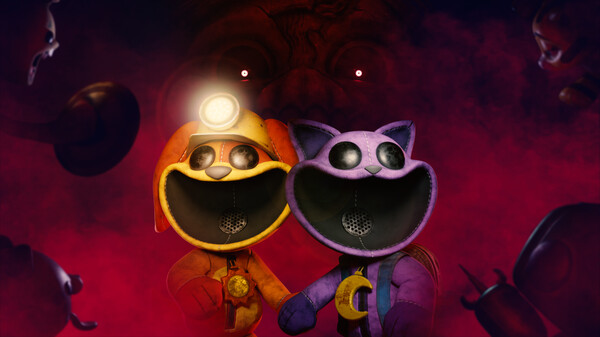
Threats split by how they attach rather than by how much damage they do. Cappy latches onto a player and keeps chewing until somebody removes it, and the same cat that poisons a player is small enough to be missed in a dark room, which makes proximity a defensive need and not a social preference. Bombs are area denial rather than pursuit: they move a team out of a room it was searching, sometimes into whatever it was running from. The stalking enemy is the one that listens, and the recorded counter is to break line of sight, wait for it to pass, then turn left instead of running, because running is the thing it tracks.
Death is a state, not an ending. A downed player becomes a pile of bones and stays there until somebody reaches the body, and the HUD keeps a small icon showing roughly where that is, which is the only reason a rescue is possible at all. Being carried or dropped at the cart brings a player back after a delay long enough that a team losing two people at once usually loses the quota with them. Recovery is not free either: stitching somebody up needs the kit and the moment, and a player who calls for it too late is told plainly that it cannot be done right now.
Progress is reported in fragments - a bank message when half the materials are in, silence when they are not - and the rest of the meta layer is visible but closed. End-of-shift stats were mentioned in sessions and never actually shown, the perk list was described as something that arrives later, and a part machine opened only after a lever was pulled. That is the honest edge of a beta: the room exists, the door opens, the screen behind it does not. Any guide that quotes perk values or stat tracking is guessing about a build nobody has played yet.
The facility keeps a recognisable identity while rearranging itself: players who ran a shift a couple of weeks earlier described the maps as fairly similar with the layout changing underneath, and one room in the beta reads as a school while another is reached through a cave mouth. That is worth knowing before splitting up, because a team that memorised corridors rather than landmarks spends the last minutes of a shift lost in a wing it has technically already searched. The cart is not fixed either - sessions record the group arriving to find Barry had been moved - so the return leg cannot be planned from the first room the team looted.
Items carry a second use that is easy to forget under pressure: one player escaped death outright by spending an item, and the same slot covers the slap hand, the shield and the healing kits. Value is uneven enough to make that trade a real one - a glow stick pack drew the question of whether it was worth anything at all, smiling critter parts were quoted at two hundred tribute each, and a body carried back to the cart does not deliver itself. Whether the doors ahead open with items or with gates is itself unclear in the beta: one shift concluded there was nothing left to find and the next gate was the whole objective.
Sources on record
-
The early build contains work-in-progress and experimental systems, and balance is still being tuned.
Tier 3, creator footage / checked 2026-10-19
-
A public beta ran with player feedback feeding the roadmap.
Tier 1, first-party / checked 2026-10-19
Source identifiers, capture dates and the raw quoted lines are held in this site's research record rather than reproduced on the page, so each claim above can be checked against the original without the page itself standing in for the source.